
The Valueless Presidency
America is no longer Europe's ally. Stop bleating about NATO. It's already gone.

Having flown in from Minnesota, I am now in Washington D.C., well into the second hour of a press conference which, even by Donald Trump’s standards, is spectacularly addled.
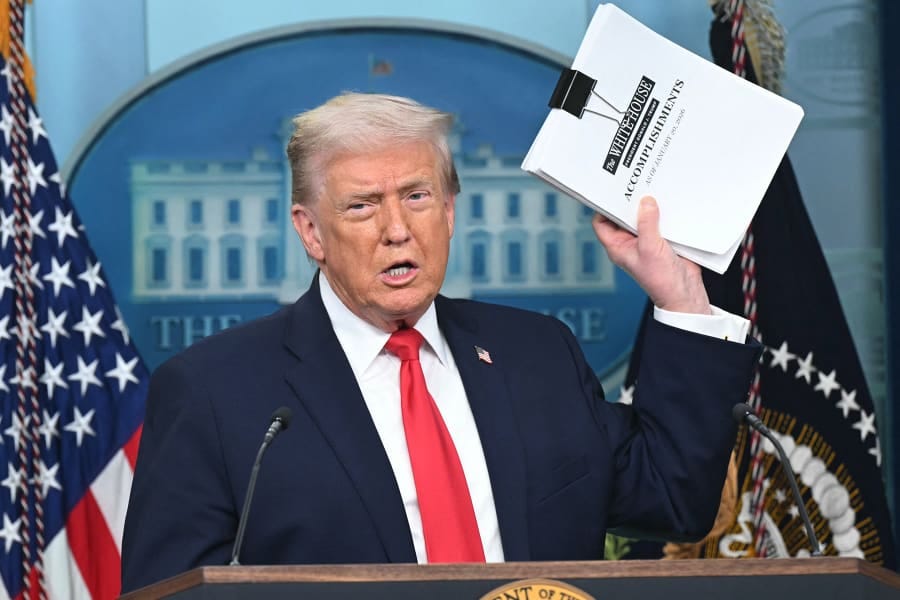
It was supposed to celebrate the achievements of the first year of his second term. Instead, he returned obsessively to one theme: his fury at not having won the Nobel Peace Prize. He seems clearly aggrieved. In expressing that incredulity, he revealed far more than he intended about his psychology and his conception of politics:
“I should have gotten the Nobel prize for each war…I saved millions and millions of people…and don’t let anyone tell you that Norway doesn’t control the shots. It’s in Norway. Norway controls the shots. It’s a joke. They’ve lost such prestige. That’s why I have such respect for Maria doing what she did. She said I don’t deserve it — he does.”
— President Donald J. Trump, 20 January 2026
I am sure his belief in the Norwegian government’s role (or lack of it) in the Nobel process is entirely sincere. It is also entirely revealing. Trump simply cannot conceive that an institution could — or should — be genuinely independent of coercion or political power. He believes everything and everyone can be bought, because that’s been his entire life.
That is the real change Trump represents, and it is woven through his second presidency: he is the valueless president, aware only of price. This term has been marked by a relentless personalisation of executive power. Whether it is the creation of a personal militia and the lawless actions of ICE (more to come from me on that), the accrual of extraordinary personal wealth for himself and his family flowing directly from the presidency, the emasculation of Congress, or the dismantling of the Western alliance, the logic is always the same. What matters is the ability to act without restraint. The world’s CEO.
The levels of delusion surrounding Trump continue to astound. There is an intellectual basis to parts of the MAGA movement. But for Trump personally, there remains a persistent tendency — one to which I am not immune — to over-intellectualise his motivations. That impulse is strong because the alternative is too disturbing to contemplate. If there is an intellectual logic to what Trump is doing, it can be reasoned with, bargained away, moderated. But the truth was plain for all to see at today’s press conference. The President is a writhing mass of impulses and political urges.
It is often said that Trump is transactional. That is no longer quite right. He is not interested in transacting; he is interested in taking and accumulating: power, land, and riches. On Greenland, sage commentators talk of Arctic security, of critical minerals. It is all nonsense. Trump wants it because Trump wants it, and he sees no good reason why he should not have it. Nor do I believe there is anything that can be offered to make that desire recede. That is why I wrote a year ago that we should take his statements on Greenland seriously. Once again, we reassured ourselves by pretending Trump was something he is not: a liar about who he is.
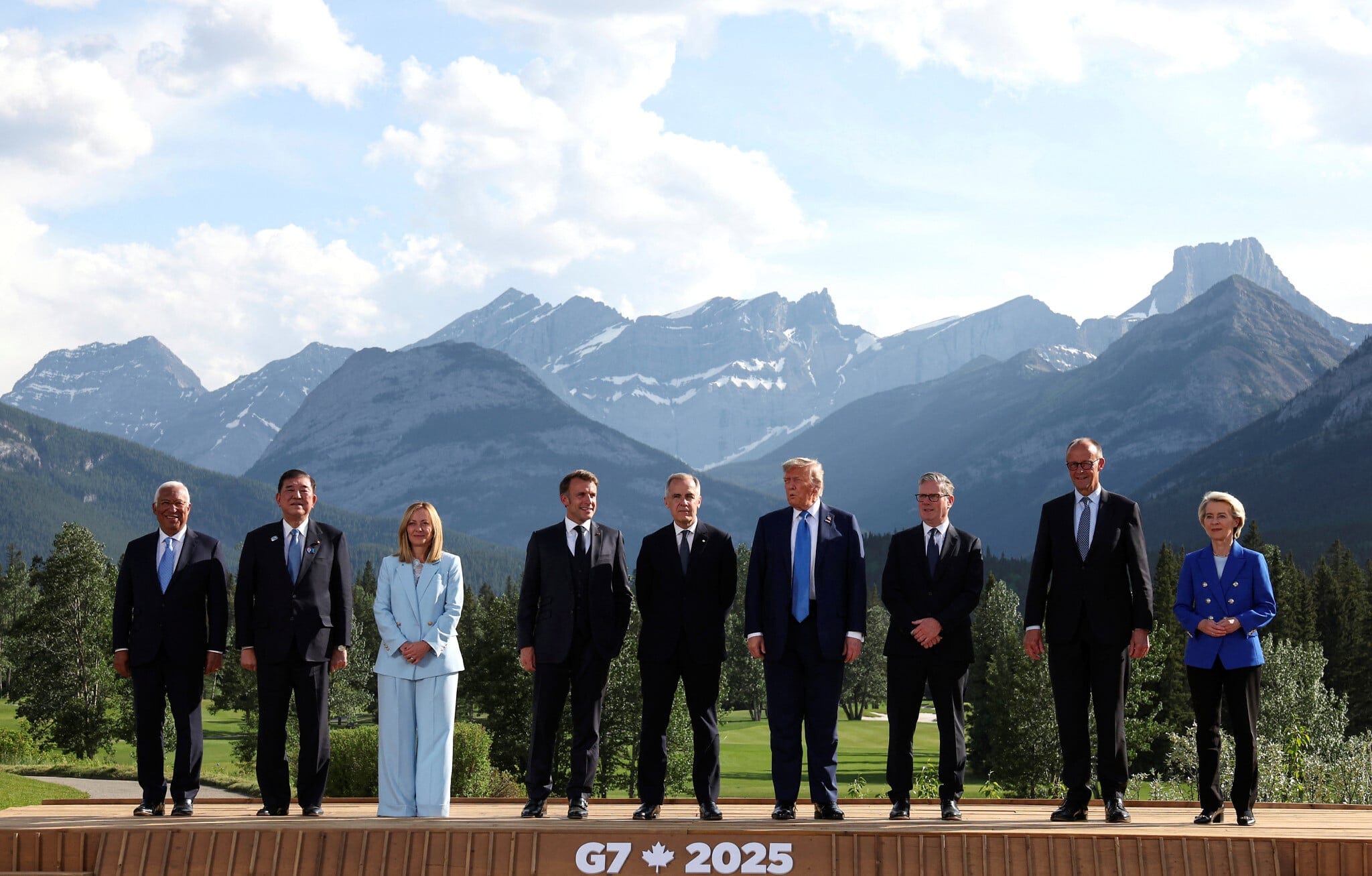
Even now, European political elites continue to delude themselves. The truth is that NATO is already over — at least for the time being — and may well be unsalvageable. The alliance was always, in part, a confidence trick. It relied on a shared assumption that whatever political differences existed, each member would ultimately treat the security of all as indivisible. With European troops now deployed as a deterrent to the United States, and with active extortion emanating from the White House, who could credibly believe that assumption still holds? Certainly not the Kremlin.
I understand why this is terrifying to contemplate. But the objective reality is clear. The United States under Trump is no longer our military ally (Greenland), our strategic ally (Ukraine and Russia), our political ally (a National Security Strategy which openly advocates backing far-right parties to disrupt European democracies facing “civilisational erasure”), nor our economic ally (tariffs). Even if the Greenland crisis is defused today, something else will take its place tomorrow. Trump is not interested in the North Atlantic; he is interested in the Western Hemisphere: the creation of a two-continent American sphere of influence.
The irony is that the return of spheres of influence is a sign of American decline, not strength. In the era of Pax Americana, after the fall of the Soviet Union, the United States was the enforcer of its own global order. That order has fractured, giving way to a multipolar world. Trump’s ambitions appear imperial, but they amount to dominion over a lesser empire — hemispheric rather than global — a world in which the United States can no longer enforce an order, even if it wished to. The Trump turn is as much retreat as expansion: decline obscured by noise. Small-empire energy. In the long run, fealty is weaker than loyalty.
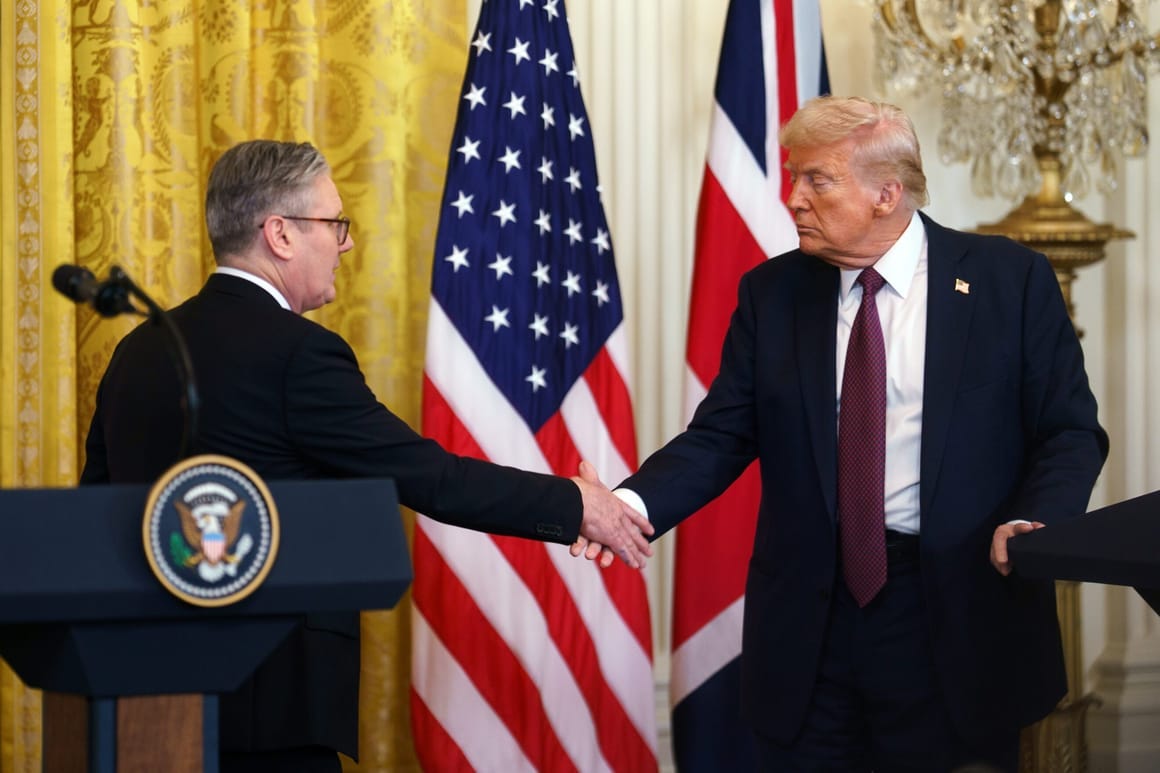
Britain’s position is especially exposed. We can wield little influence over an erratic president, and we have severed ourselves from the European Union — a strategic error that looks more egregious with each passing day. The Brexit prospectus was built for a benign geopolitical environment, predicated on deepening transatlanticism. Those assumptions have collapsed. The three pillars of recent British foreign policy — the US relationship, EU membership, and Commonwealth influence — have largely evaporated. Our vassal status is becoming harder to deny. Keir Starmer often says it is folly to choose between Europe and the United States. The truth is we now have neither.
We are only one quarter of the way through the Trump second term. It is hard to conceive what might comprise the rest. It is no use pretending that the old order can be restored. There will be no restoration, even with a Democratic president, at home or abroad. The trust will no longer be there from old friends and power accrued to the presidency will not be relinquished, old norms and rules not restored. Trump will probably prove the most consequential president of our lifetimes. He is remaking the world anew. We have to recognise that and not cling to the one he has already replaced.
That's the grim reality.
It's the worse possible position any UK PM could find themselves in.
The UK relationship with the USA is not salvageable (unless we want to be a Belarus, a vassal state) but the position with the EU is.
Well written Lewis and really scary too. I think many of us who watch the political landscape are feeing very troubled. Your piece is hard hitting too. Britain is drifting and we can’t seem to place our anchor anywhere. I was always a glass half-full, optimist, but I feel that we are fast losing. I’m not against Starmer like many commentators in the press seem to be. I can see that he is trying his ‘Ming Vase’ type of diplomacy on the world stage, to try and track a path for the UK in what is an unprecedented (but is it?) febrile time. While I think he is a better PM and person than he is given credit for, with a better support team trying their best in the short time they have been allocated, I personally don’t think he’s got the time, the electoral backing or the personality to land the country safely. We truly are in the hell and a hand cart moment. I’m shocked that the UK electorate wants to vote in a company (according to many commentators, Reform is headed up by a charlatan CEO), that has been at the forefront of the most recent schism with our nearest trading neighbour for a position that amounts to a diminished role on the world stage. The UK appears to be destined to be someone’s vassal state in this current climate. We let go of one position of strength I felt we had. I can’t help feel that we are at the tail end of our sphere of industrial power and empire legacy influence. The UK electorate are mired in the day to day and not at the bigger picture level…had they been, perhaps Brexit might not have happened. We truly are living in the “Vibe” era. I’m not sure what comes next, but it isn’t going to be pretty. I sort of fear for my children’s generation, but I’m also slightly hopeful (glass-half full optimism!), maybe they might be better at handling and navigating this next era, because my generation X, millennial and baby boomer cohorts, have lost the plot. I don’t imagine a kinetic war (do we truly even have the energy and resources for one, even on the world stage…I mean, look how we are letting the poor Ukrainians hold the front line), but as the head of MI5 or was it MI6 said, we are potentially already in a cyber one. I fear we will definitely be in a climate one before too long!